Recent Posts

You Need This No-Knead Bread

You Need This No-Knead Bread

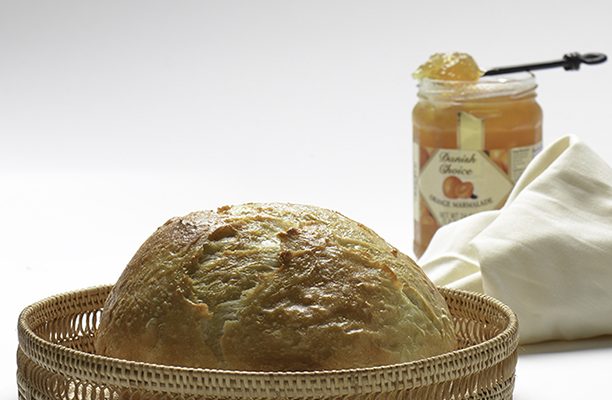
Trust me. You can do this. I know. I know. It’s (eek!) bread making. Still. This recipe is a “take” on  the slow-rise fermentation bread making technique that was popularized some years ago by Jim Lahey, founder of New York’s  Sullivan Street Bakery. Mark Bittman,…

Israeli Couscous, Eggplant and Tomato Gratin

Israeli Couscous, Eggplant and Tomato Gratin

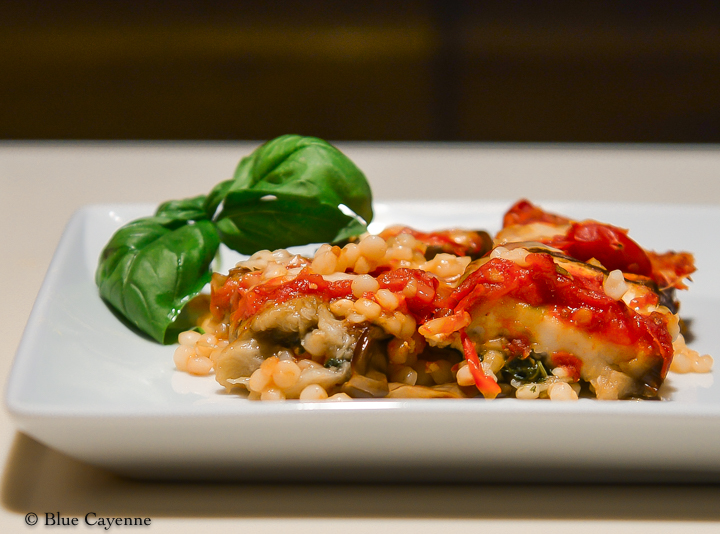
It hasn’t worked for me with kale or spirulina, but I’m willing myself to love eggplant. As you know, if you have been reading this blog, eggplant and I have a fraught relationship–a bit like Donald and Melania. Eggplant recipes, especially ones that tout their…

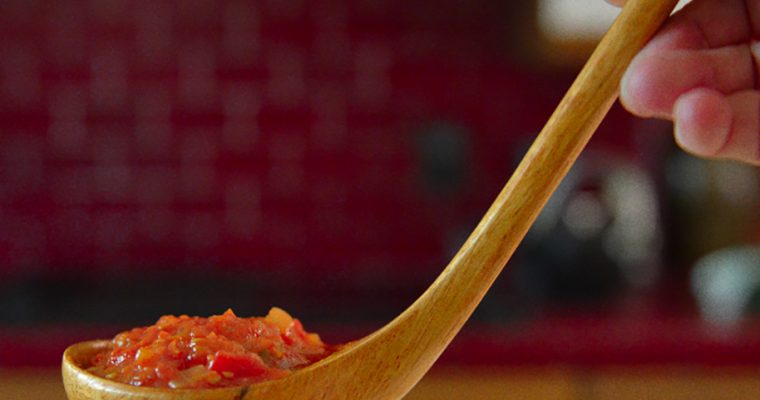
Julia’s Provencale Tomato Sauce

Julia’s Provencale Tomato Sauce


We have a lot of things to thank Julia Child for beyond the fact that she popularized French home cooking here in the U.S.

She made cooking cool. She pioneered a cooking show genre that has exploded into the countless cooking shows that eat up our time but feed our souls. She taught us that you don’t have to look like Giada De Laurentis to attract an adoring following. And then there was that part about spying against the Axis powers during WWII. (Lest you think I’m feeding you some fake news, here a credible source–The CIA (No. Not the Culinary Institute of America. The spies!) : https://www.cia.gov/news-information/featured-story-archive/2007-featured-story-archive/julia-child.html .

Julia also taught us to lighten up in the kitchen. Her obituary in the NY Times quotes this wonderful story: “Mr. Drummond, her producer, also debunks another myth. Mrs. Child never dropped a chicken or a turkey on ‘The French Chef.’ It was a potato pancake that flew onto the work table when she tried to flip it. She put it back in the pan, pressed it back into shape and said, ‘Remember, you are alone in the kitchen, and no one can see you.’ ”

So, I’m wishing you good luck making this marinara from Child’s collection of recipes. I suggest that you pretend that you are Julia Child, all six foot two of her, as you make the sauce. Have a good laugh while you are cooking. Keep your eyes open for the bad guys and remember, if you mess it up, you are alone in the kitchen and no one can see you.

Yields One quart

Julia’s Marinara Provencale

1 hr, 30 Total Time

Save RecipeSave Recipe

Ingredients

  • 1/4 C. olive oil
  • 2/3 C. finely minced yellow onions
  • Kosher salt and black pepper
  • 4 t. all-purpose flour
  • 5-6 pounds ripe tomatoes (quartered)
  • 1/8 t. sugar (more to taste)
  • 4 cloves garlic (minced)
  • A large herb bouquet of 8 sprigs parsley, 1 bay leaf and 4 sprigs thyme (tied in cheesecloth)
  • 1/4 t. fennel seeds
  • 1/2 t. dried basil, oregano, marjoram or savory
  • Large pinch saffron threads
  • 1 dozen coriander seeds (lightly crushed)
  • 1 two-inch piece dried orange peel (I used fresh)
  • 2-3 T. tomato paste (optional)

Instructions

  1. Heat olive oil on medium-low heat in a large heavy pot. Sprinkle onions with salt and saute for about 10 minutes. You want the onions to be soft but not brown. Sprinkle flour into the pot over the onions, stir to mix and cook for about 3 minutes more (do not brown the flour mixture).
  2. Use a grating blade in your food processor. Push the tomatoes through the processor tube and through the grating blade to make a rough puree. (I left my tomatoes a bit chunky.)
  3. Stir tomatoes, sugar, garlic, herb bouquet, fennel, basil, saffron, coriander, orange peel and 1 teaspoon salt into the onion mixture. Cover and cook slowly for about ten minutes until the tomatoes give up their juices. Uncover and simmer for one hour. You want your sauce to be thick. Remove the herb bouquet and taste. Add salt, pepper, sugar and optional tomato paste. Stir.
7.8.1.2
77
https://bluecayenne.com/julias-provencale-tomato-sauce

This recipe was adapted from one that appeared on the NT Times food site. Here is the link: NYTimes: Julia Child’s Provencale Tomato Sauce.

You can buy the book here: Mastering The Art of French Cooking at Amazon.


SaveSave

SaveSave

SaveSave

SaveSave

SaveSave

SaveSave

SaveSave

SaveSave

SaveSave

SaveSave

SaveSave

SaveSave

SaveSave

SaveSave

SaveSave

SaveSave

SaveSave

SaveSave

Artichokes: Grilled and Smothered and Delicious

Artichokes: Grilled and Smothered and Delicious

Anyone out there who doesn’t like artichokes? I don’t see any hands. I think artichokes are a bit like avocados. Even served simply without a whole lot of fuss, both vegetables generate a lot of buzz around the table. Carrots and celery certainly don’t get…

Marion

Marion

Blue Cayenne will be two years old in October. Over those (almost) two years, Marion Sutton has been one of Blue Cayenne’s (and my) most supportive friends. I met Marion in one of Nami Aoyagi’s amazing Digital Media Arts classes at The Huntington Beach Adult…

Of Eggplants, Falcons and Mt. Fuji: Chermoula Eggplant with Bulgur and Yogurt

Of Eggplants, Falcons and Mt. Fuji: Chermoula Eggplant with Bulgur and Yogurt


Which “vegetable” is actually a berry, has the highest nicotine content among all vegetables, and is 95% water? (Hint: Chinese ladies once used the dye extracted from this vegetable’s skin to polish their teeth to a then-fashionable gray hue.)

It’s the eggplant. Who knew? (Don’t worry about the nicotine part, by the way. You would have to consume 20 pounds of eggplant to get the amount of nicotine in a single cigarette. That is more eggplant than even eurysome Chris Christie could eat in one sitting.)

Also called a brinjal (India), a melanzana (Italy) and an aubergine (France), the eggplant is a member of the nightshade family that includes tomatoes and potatoes. Native to Asia, the eggplant was introduced into Europe via Mediterranean trade. Thomas Jefferson is credited with introducing the eggplant to American tables and grew plants in his Virginia garden.

Historically, the reputation of the eggplant is a mix. On the one hand, there is a charming Japanese proverb that enthuses about dreaming of eggplant on New Year’s Eve: “The happiest omen for a new year is first Mt. Fuji, then the falcon, and lastly eggplant.” (I’m trying to imagine the storyline of such a dream. It might go something like this… With a cloud-shrouded Mt.Fuji looming majestically in the background, a solitary falcon soars soundlessly above the landscape. Suddenly, spotting its prey, the falcon stops mid-air and then swoops from the sky, only to find that he has targeted a single purple eggplant. Bummer for the falcon. No! Wait! The curious falcon notices that the eggplant is glowing–an enchanted orb.  Then, before the world-weary falcon’s eyes, the eggplant transforms into a lovely purple-gowned princess. The princess promptly falls in love with the lonely falcon and bestows upon him a single magical kiss whereupon the falcon morphs into a handsome Japanese prince. And today, if you look ever so carefully, you can see them– two lovers standing in luxuriant fields of eggplants growing on the slopes of Mt. Fuji and pondering their good fortune in life. The prince is now a wealthy anime mogul and the princess operates an elegant ryokan named L’aubergine. <cue the music>)

On the other hand, Medieval Europeans were wary of consuming eggplant, believing it was a poison that could cause madness. (The Italian word for eggplant is a variation on the term mad apple.)

The high season for eggplants is August to October, so you will find an abundance of eggplants (there are more than twenty varieties) in markets at the moment, and this recipe, adapted from Ottolenghi’s well-regarded cookbook Jerusalem, is both a delicious and beautiful way to ease into eggplant season.

Wishing you handsome princes and eggplant dreams.

Yields 4 Servings

Chermoula Eggplant with Bulgur and Yogurt

1 hr, 30 Total Time

Save RecipeSave Recipe

Ingredients

  • 2 cloves garlic (crushed)
  • 2 t. ground cumin
  • 2 t. ground coriander
  • 1 t. chili flakes
  • 1 t. sweet paprika
  • 2 T. finely-chopped preserved lemon peel (I used 1 t. lemon zest)
  • 2/3 C. olive oil
  • 2 medium eggplants
  • 1 C. fine bulgur (I used coarse)
  • 2/3 C. boiling water
  • 1/2 C. golden raisins (or more to your taste)
  • 3 1/2 T. warm water
  • 2 t. cilantro (chopped)
  • 2 t. mint (chopped)
  • 1/3 C. pitted green olives (roughly chopped or halved)
  • 1/3 C. sliced almonds (toasted)
  • 3 green onions (chopped)
  • 1 1/2 T. freshly squeezed lemon juice
  • 1/2 C. Greek yogurt
  • Salt
  • Feta (crumbled) to garnish
  • Pinenuts (toasted) to garnish
  • Chopped cilantro to garnish
  • A drizzle of good quality olive oil

Instructions

  1. Preheat oven to 400 degrees F.
  2. Chermoula: Mix garlic, cumin, coriander, chili, paprika, lemon, 2/3 of the olive oil, and 1/2 t. salt in a bowl and set aside.
  3. Cut eggplants in half lengthwise. Score the flesh of the eggplants and spoon chermoula sauce over each half, spreading evenly. With the cut side facing up, place eggplants on a baking sheet and roast the eggplant in the oven for about 40 minutes. (The eggplants should be totally soft when they are done.)
  4. Put the bulgur in a bowl and pour boiling water over the bulgur. Let the bulgur sit and absorb the water while you finish the dish.
  5. Put raisins in a bowl, add warm water and let them sit for about 10 minutes. Drain the raisins and discard the water. Add the soaked raisins to the bulgur and add remaining oil. Add cilantro, mint, olives, almonds, green onions, lemon juice and a pinch of salt. Stir. Taste and adjust salt if necessary.
  6. Plate the eggplants and spoon bulgur mixture on top of each cooked eggplant half. Spoon on a dollop of yogurt. Garnish with feta, cilantro, and pine nuts. Drizzle a bit of olive oil over the eggplants. Serve warm or at room temperature.

Notes

You can find bulgur at Middle Eastern markets. I buy mine at the local Jon's Marketplace. The recipe calls for fine bulgur but I had coarse bulgar on my shelf and it worked fine.

The original recipe called for using preserved lemon peel. Preserved lemon peel is wonderful but I didn't have any in my pantry. I substituted the zest of a lemon.

7.8.1.2
74
https://bluecayenne.com/of-eggplants-falcons-and-mt-fuji-chermoula-eggplant-with-bulgur-and-yogurt

Here is a link to Amazon and Ottolenghi’s book: Yotam Ottolenghi’s Jerusalem cookbook.


SaveSave

SaveSave

SaveSave

SaveSave

SaveSave

SaveSave

SaveSave

SaveSave

SaveSave

SaveSave

SaveSave

SaveSave

SaveSave

SaveSave

SaveSave

SaveSave

SaveSave

SaveSave

SaveSave

SaveSave

SaveSave

SaveSave

SaveSave

SaveSave

SaveSave

SaveSave

SaveSave

SaveSave

SaveSave

SaveSave

SaveSave

SaveSave

SaveSave

SaveSave

SaveSave

SaveSave

SaveSave

SaveSave

SaveSave

SaveSave

SaveSave

SaveSave

SaveSave

SaveSave

SaveSave

SaveSave

SaveSave

SaveSave

SaveSave

SaveSave

SaveSave

SaveSave

SaveSave

SaveSave

SaveSave

SaveSave

SaveSave

SaveSave

SaveSave

SaveSave

Easiest Vanilla Ice Cream

Easiest Vanilla Ice Cream

This is the easiest vanilla ice cream recipe ever. You should make it now before you are priced out of the vanilla aisle! During normal times, vanilla, approximately 80% of which is produced in the hardscrabble African island-nation of Madagascar, is the second most expensive…

Give Yourself A Hug: Broccoli Cheddar Soup

Give Yourself A Hug: Broccoli Cheddar Soup

For me, it’s Snickers bars, refried beans, candied corn, and vanilla ice cream. (No. I don’t eat them together.) We’re talking about comfort food today, or, as the dictionary defines it:  ” food that is enjoyable to eat and makes the eater feel better emotionally.”…

For the love of plums…

For the love of plums…

For the love of plums…

I have eaten
the plums
that were in 
the icebox

and which you were probably
saving
for breakfast

Forgive me
they were delicious
so sweet and so cold

--"This is just to say" by William Carlos Williams

William Carlos Williams and I are on the same page when it comes to plums; neither of us is (was)  able to exert much self-control.  In Williams’ case, he offered a poetic non-apology apology for his misdeed–a poem that takes the form of a note you might find left on an empty refrigerator.

Over the years since its publication in 1934, Williams’ minimalist poem has become something of a modern meme, with clever spoofs of the poem exchanged among friends and posted online (like the one that appears below).


But back to plums…not only has the taste of plums intrigued cooks (and poets) for centuries, but the word plum has insinuated itself into our conversations as a metaphor. If you get a plum of a job, for example, that’s a very good thing. Conversely, if someone tells you that you are a bit of a plum, you are being called an idiot. (Ouch!)

Right now, plums (the fruit kind…well, maybe both kinds) are everywhere! The stone fruit season runs from May to early October and supermarket bins and farmers’ market stalls are overflowing with multiple varieties (and a rainbow of colors) of plums. (There are more than 2000 varieties, by the way!)

Speaking of the abundance of plum varieties in cultivation, we owe a debt of gratitude to Luther Burbank whose hybridizing efforts with the fruit have given us considerable biodiversity in plum production. He is credited with developing over 100 plum varieties. He mixed it up, too, crossing plums with apricots. Today, as a result of Burbank’s pioneering work and the work of gifted hybridizers since,  we can find beautiful pluots (75% plum/25% apricot), plumcots (50% plum/50% apricot) and apriums (75% apricot/25% plum) in the markets.

So buy some! At about 30 calories for one medium-size plum, there is no good reason to resist the temptation to fill up your fruit bowls with this season’s beautiful plums. Remember that plums are also rich sources of antioxidants, minerals and vitamins–particularly vitamin C– so you are buying a bag of health foods.


Here is a recipe for a great plum tart made with a cookie-ish crust. This recipe is delicious and the finished dish is visually spectacular. I confess that I had planned to bake two tarts this time–one for me and one for a friend–but the temptation of fresh plums in my fruit bowl got the better of me.


This recipe was adapted from one posted on the epicurious site. Here is a link to the original recipe: Epicurious’ recipe for Plum Tarts .


Yields 12 Servings

Plum Tart
Save RecipeSave Recipe

Ingredients

  • For pastry dough:
  • 1 1/2 C. all-purpose flour
  • 1 stick cold unsalted butter (cut into 1/2-inch pieces)
  • 1/4 C. sugar
  • 1/2 t. salt
  • 1/2 t. finely-grated fresh lemon zest
  • 2 large egg yolks
  • For filling:
  • 1/2 C. sugar
  • 1 1/2 T. cornstarch
  • 2 pounds plums (pitted and sliced)
  • 1/2 T. fresh lemon juice

Instructions

  1. Preheat oven to 425 degrees F.
  2. Using your food processor, combine flour, butter, sugar, salt and zest. Pulse the mixture until it resembles a coarse meal with some small lumps that are about the size of a pea mixed in. Add the egg yolks and process until the mixture begins to come together in a clump.
  3. Place the dough mixture onto your work surface and divide it into 2 portions. Smear each portion once with the heel of your hand (using a forward motion). This will help distribute the fat in the dough. Put the two portions together and form into a ball.
  4. Put the ball of dough into a tart pan. With floured fingers, press the dough into the tart pan. You want an even 1/4 inch layer of dough covering the bottom of the pan and extending up the sides of the pan. (Use a tart pan with a removable bottom) Chill the dough in the tart pan for approximately 30 minutes--until it is firm.
  5. To prepare the filling for the tart, mix the sugar and cornstarch together in a large bowl. Next, add the plums and the lemon juice and toss the mixture to coat the plums. Let this mixture stand for approximately 30 minutes. Stir the mixture occasionally. You want to have a juicy mixture of plums to arrange in your tart shell.
  6. Arrange the plum slices in the tart shell in concentric circles. Pour the juices in the bowl over the plums in the tart. (I had some juice left over the last time I made this tart. I was using particularly juicy plums. I didn't want to fill the tart shell to overflowing and did not use all the liquid.)
  7. Bake your tart in the middle of your oven for 15 minutes at 425 degrees F. After 15 minutes, take the tart out of the oven and loosely cover it with foil. Return to the oven and bake the tart for 40 to 50 minutes at 375 degrees F. When the tart is properly baked, the plums will be tender and the juices will be bubbling and slightly thickened.
  8. Cool tart completely before trying to remove it from your tart pan.
7.8.1.2
71
https://bluecayenne.com/for-the-love-of-plums


SaveSave

SaveSave

SaveSave

SaveSaveSaveSave

SaveSave

SaveSave

SaveSave

SaveSave

SaveSave

SaveSave

SaveSave

SaveSave

SaveSave

SaveSave

SaveSave

SaveSave

SaveSave

SaveSave

SaveSave

SaveSave

SaveSave

SaveSave

SaveSave

SaveSave

SaveSave

SaveSave

SaveSave

SaveSave

SaveSave

SaveSave

SaveSave

SaveSave

SaveSave

SaveSave

SaveSave

Sweet Dreams and Salad Days

Sweet Dreams and Salad Days

Yesterday I had the good fortune to get together with old friends. We ate a lot, laughed a lot and caught up on each other’s lives. Juliet got a lot of attention, too. It was a very good day all around. Today Juliet is sleeping…