Recent Posts

Strawberry Sorbet

  Did you know that if all the strawberries produced in California in one year were laid berry to berry, they would go around the world 15 times?  I didn’t think so. Did you know that ninety-four percent of households in the United States consume…

Hope, Beauty and a Mushroom Galette

  Today, April 3rd, is National Find a Rainbow Day. Woo-hoo!  Let’s party!  I’ll bring the hors d’oeuvres. National Find a Rainbow Day is a day to either follow your whimsy and go looking for a rainbow, or, failing that, to look for beauty and hope…

White Bean Stew with Carrots, Fennel and Peas

I often look to David Tanis’ food column for inspired food ideas.

He was a lead chef for more than thirty years at Berkeley’s legendary Chez Panisse. That credential alone positions him in the pantheon of culinary immortals.

Since leaving Chez Panisse in 2011, Tanis has written a weekly column, City Kitchen, for the New York Times. The guiding concept for his column is “big city, small kitchen, busy cook,” so his recipes are aimed at people who like to cook (and eat)  at home. That would be me. If you are reading this blog, I suspect that describes you, too.

Tanis’ culinary signature is the showcasing of fresh seasonal ingredients in accessible recipes, often in Mediterranean-inspired dishes. Susan Goin of Los Angeles’ Luques wrote of him: “If I could have one person in the world make me a snack or one good dish, it would be David Tanis.” Enough said.

This recipe from a recent City Kitchen column is excellent. Fortunately, it instantly caught my attention with its headline: “My New Favorite Beans.”

That’s a pickup line for me. I’m a sucker for recipes where the chef touts his food with superlatives.

Favorite. Best. Killer. If a recipe title uses any of those words, I’m in. Throw Grandma in (as in “Grandma’s Absolute Favorite Biscuits”) and I’m over the moon.

Sometimes I get “burned” that way.  (Oh! No!  Was that a shameless food pun?  Sorry.)  Not with this recipe! This bean creation, packed with all manner of good and good-for-you vegetables, is full of flavor and deserves all the superlatives Tanis can throw at it.

It is versatile, too. Serve it as a satisfying main dish or as a bold side dish. It would be beautiful on a Spring buffet. I used my stew to construct a rice bowl. Topped with its garnish of lemon zest, chopped mint, chile and parsley and crowned with a pretty hard-boiled egg, the rice bowl presentation hit all the right notes for me. The flavor of the fennel in particular was exceptional against the flat flavor of the steamed rice and the little explosions of sour, hot, and minty tastes from the garish moved the dial on this dish from excellent to wonderful. I had the rice bowl for dinner two nights in a row!

Speaking of fennel, I was particularly intrigued by Tanis’ use of the under-appreciated vegetable in this recipe. I don’t often use fennel but I always enjoy trying new tastes and I’ve long wanted to cook with fennel in a serious dish. Now I’m thinking that a fennel gratin would be pretty terrific.

By the way, fennel, with its distinct anise aroma, is in the carrot family. Did you know that? I didn’t. It is also related to parsley, dill and coriander. That’s quite a family of flavors! You buy fennel in the market by the bulb. It can be eaten raw (in thin slices) in salads or cooked in any number of dishes. All parts of fennel are edible, but this recipe uses only the bulb.  Fennel is often served braised or cooked in a gratin.

Fennel probably originated in the Mediterranean and is known to have been popular with the ancient Greeks and Romans, both as a food item and as a medicine. Interestingly, in Greek mythology, knowledge was delivered to man in a fennel stalk filled with coal.

You can feel virtuous about eating fennel. A cup of fennel provides 14% of your daily requirement for vitamin C, 11% of your daily fiber needs and 10% of your daily requirement for potassium. Did I mention that a cup has only 27 calories?

Here is the link to Tanis’ original recipe:

https://cooking.nytimes.com/recipes/1018666-white-bean-stew-with-carrots-fennel-and-peas

Yields Six to eight servings

White Bean Stew with Carrots, Fennel and Peas

2 hr, 30 Total Time

Save RecipeSave Recipe

Ingredients

  • 2 C. dried white beans (about 1 pound)
  • 1 medium onion (peeled and halved and stuck with two cloves)
  • 1 bay leaf
  • 1 small sprig rosemary
  • Salt and pepper
  • 3 T. extra-virgin olive oil
  • 1 large white onion (medium diced--about 1 1/2 C.)
  • 3 celery stalks (medium diced, about 1 C.)
  • 6 orange carrots (medium diced, about 1 1/2 C.)
  • 1 or 2 fennel bulbs (medium diced, about 1 1/2 C.)
  • 1 t. crushed fennel seed
  • 1/2 t. red pepper flakes
  • 1/2 t. minced garlic
  • 1 bunch small yellow carrots (peeled and left whole or halved lengthwise)
  • 1 C. fresh or frozen peas
  • 3 T. roughly-chopped parsley
  • 2 T. roughly-chopped mint
  • 1/2 t. grated lemon zest
  • 1/2 serrano chile (seeds removed and finely chopped)
  • 4 large eggs (boiled 9 minutes, chilled in ice water, peeled and halved)

Instructions

  1. Put beans in a large pot with onion halves, bay leaf and rosemary. Add enough cold water to cover the ingredients by about two inches. Cover the pot and bring the water to a boil. Reduce the heat, shift the lid on the pot until it is slightly ajar, and simmer the beans. Check the beans regularly to be sure that you maintain about one inch of water above the beans. After approximately forty minutes of simmering, stir 2 t. salt into the beans and continue to cook until the beans are tender. This will take approximately one and a half hours depending upon the age of the dried beans. Alternatively (and more quickly), you could cook the beans in your Instant Pot. When beans are cooked, set aside to cool.
  2. Heat oil in a large skillet and sauté diced onion, celery, carrots, and fennel. Season with salt and pepper and add fennel seed, red pepper flakes and garlic to the mixture. Continue to cook this mixture until the vegetables are softened. This takes approximately ten minutes. Lower your heat as necessary. Be careful not to burn the garlic or otherwise brown the vegetables. Set aside.
  3. Simmer yellow carrots in a pan of salted water until they are tender but firm. This will take about five minutes. Remove carrots from water, drain, pat dry and cool. Set aside.
  4. Put peas into a pan of salted water and simmer for about two minutes (or less if you are using frozen peas). Drain the peas and add them to the sautéed vegetables.
  5. To assemble the dish, heat the vegetable mixture over medium high heat. Add drained beans. (Discard the onions but reserve a cup of the cooking liquid from the beans.) Continue cooking until the mixture is evenly heated. As you are heating the vegetable mixture, add reserved cooking liquid to keep the mixture moist. Add salt to taste. Add cooked yellow carrots and let them heat in the mixture.
  6. To serve, either serve this dish spread on a platter and garnished with the mint/parsley/chile mixture and the halved boiled eggs or serve over rice in a pretty rice bowl. Just before serving, drizzle with a bit of olive oil.

Notes

I used Rancho Gordo pretty yellow eye beans in this recipe. The original recipe simply calls for dried white beans.

Be generous with the mint/parsley/chile garnish. The fresh flavors of the garnish elevate this recipe to high level of taste.

Nutrition

Calories

300 cal

Fat

13 g

Carbs

44 g

Protein

8 g
Click Here For Full Nutrition, Exchanges, and My Plate Info
7.8.1.2
48
https://bluecayenne.com/white-bean-stew-carrots-fennel-peas


Strawberry Mascarpone Tart

Do the words five ingredients and gourmet dessert go together? Throw in the word fast and you have this gorgeous strawberry tart. Your guests will rave (in a good way). You may be unfamiliar with mascarpone cheese, the main ingredient in this tart. Mascarpone is a mild-flavored…

Did it. Guacamole with peas!

  You know how, when you aren’t exactly sure you want to do something,  you put it off—turning instead to “must do” projects like sorting the dog’s toys by size and color? This week I’ve been nagged by the feeling that I needed to make…

Lovely Lemon Bliss Bundt Cake

Lovely Lemon Bliss Bundt Cake

Joseph Campbell famously wrote: “Follow your bliss and the universe will open doors
where there were only walls.”  Good advice but not always easy to do.

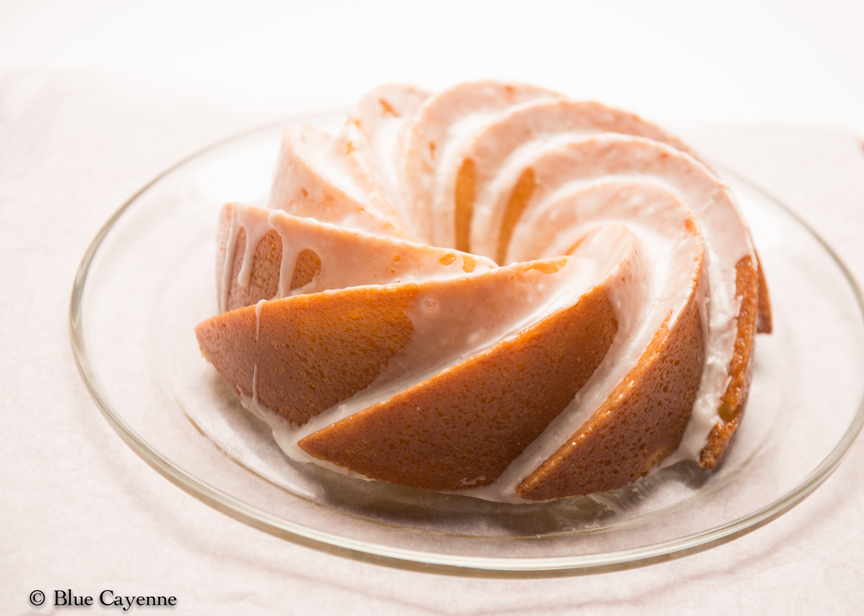
The bliss I’ve been following at the moment happens to be a cake, and it is a wonderful cake indeed. Moist. Lemony. Beautiful.

Recently, I came across this lemon bundt cake recipe on the King Arthur Flour Website. It is quite a good website if you are interested in baking. Here is the link:  Lemon Bliss Bundt Cake

This delightful cake is King Arthur Flour’s 2017 recipe for the year. Since we are only at the end of March in 2017, they must be pretty confident to declare a recipe as the 2017 winner. (But I digress.)

Incidentally, I baked this in my new Nordic Ware bundt pan. The swirling pattern is especially pretty.

I usually have a modicum of self-control when it comes to eating cake. (OK. Maybe not cheesecake!) With this lemon cake, there were no times of the day when it wasn’t tantalizing; It was a breakfast cake, a cake that was perfect to share with neighbors over a hot cup of tea, an elegant but simple dessert cake, a middle-of-the-night guilty indulgence cake. You get the picture.

Bake this cake. It is sheer bliss.

Yields 1 Cake

Lovely Lemon Bliss Bundt Cake

30 minPrep Time

1 hrCook Time

1 hr, 30 Total Time

Save RecipeSave Recipe

Ingredients

  • For the Cake
  • 16 T. (1 Cup) unsalted butter (at room temperature)
  • 2 C. granulated sugar
  • 1 t. salt
  • 4 large eggs (at room temperature)
  • 2 t. baking powder
  • 3 C. unbleached all-purpose flour
  • 1 C. milk
  • Finely grated rind of 2 medium lemons
  • For the glaze
  • 1/3 C. freshly squeezed lemon juice
  • 3/4 C. granulated sugar
  • For the icing
  • 1 1/2 C. confectioners' sugar (sifted)
  • pinch of salt
  • 2-3 T. freshly squeezed lemon juice

Instructions

  1. To Prepare the Cake: Preheat oven to 350 degrees F.
  2. Combine butter, sugar and salt and beat to combine. Continue beating until the butter mixture is fluffy and lightened in color.
  3. Add eggs (one at a time) and beat after you add each egg. Be sure to scrape the sides and the bottom of the bowl once you have added all the eggs.
  4. In a separate bowl, whisk baking powder into flour. Then, add the flour and the milk to the batter. (Add one third of the flour then one third of the milk until you have added all of those ingredients.) Continue to mix until everything is well combined. You should not have any lumps in your batter but it should look rough.
  5. Add grated lemon rind.
  6. Carefully grease and flour your bundt pan.(This is very important, particularly if you have a bundt/cake pan with an intricate design.) Pour batter into the prepared pan. Level the batter with a spatula.
  7. Bake the cake at 350 degrees F for 45 to 60 minutes. Insert a a cake tester or toothpick into the center of the cake to test for doneness.
  8. Remove the cake from the oven. Carefully run a knife around the edges of the pan to loosen the cake. Invert on a cooling rack.
  9. To prepare the glaze: Mix lemon juice and sugar together in a small pan. Heat briefly to combine and dissolve the sugar. Be careful just to get the mixture warm to maintain the fresh taste of the lemon juice. Brush this glaze over the cake while the cake is still hot. Don't apply glaze all at once. Let the glaze absorb into the cake before you add the next layer of glaze.
  10. To prepare the icing: Mix sugar and salt in a small bowl. Add 2-3 T. lemon juice and stir until you have a thick glaze that is just barely pourable. Drizzle the icing over the completely cool cake.

Nutrition

Calories

380 cal

Fat

2 g

Carbs

77 g

Protein

12 g
Click Here For Full Nutrition, Exchanges, and My Plate Info
7.8.1.2
45
https://bluecayenne.com/lovely-lemon-bliss-bundt-cake

SaveSave

SaveSave

SaveSave

SaveSave

Guacamole: Give Peas A Chance?

Certain things in American life are understood. You don’t mess with Old Glory, for example, or Texas. You don’t cut off a phalanx of Hells Angels on PCH. You don’t open wrapped candy during a performance at The South Coast Repertory Theatre. You argue with…

Brussels Sprouts Gratin

  Brussels sprouts. Yuck! Over the years, bitter little brussels sprouts and I have not been close. Sure, we hung out together a few times. Sure, I oogled the little green brussels in the bins at Sprouts and picked out the most handsome ones to…

Ravioli with Ricotta and Basil Filling

Qualcosa bolle in pentola!!!  

That’s Italian for “something boils in a saucepan”– a delightful idiom meaning “Something’s up!”

So, qualcosa bolle in pentola here in Huntington Beach.

Huntington Beach’s two wild and crazy cooking divas (and a small sweet dog named Juliet)  are back in the kitchen and we’re making handmade raviolis and a piquant tomato sauce.  (My friend Sarah is the pretty lady in the foreground.)

Before we launched into our pasta-making marathon, I did a bit a Internet research about the origins of ravioli. The first site I pulled up said that the first reference to ravioli in written history was in “14th century Venus.”  ( Venus. Venice. Close. Reminded me of some of the bloopers I read in student papers when I taught history for more years than I care to admit. One of my favorites was a kid who wrote a paper about that improbable duo: “Marx and Lennon.” That one still makes me laugh. )

More reliable history (or, at least, more reliable word processing skills) confirms that ravioli was served in European kitchens in the 14th Century, both in Italy and in Northern Europe. Some food historians connect the dish to one served earlier in Arab kitchens.

My pasta search also unearthed this wonderful old photo of JFK enjoying (?) pasta in an Italian restaurant. I think the photo is a good example of pasta photography gone terribly wrong. You’ve got to wonder if JFK had to change his suit after that shot. Here is the photo. 


Back here in Huntington Beach, Sarah and I made an eggy pasta dough for our ravioli, using  my antique Kitchen Aid mixer, the Kitchen Aid pasta attachment and our prodigious hand kneading skills. We also used a ravioli cooking mold, a Ravioliera, that I bought at Sur La Table. (If you don’t have a ravioli mold there are ways to work around that. See the link posted below.)


While Sarah and I worked the dough for our ravioli, our conversation ranged from national politics and world affairs to neighborhood news.  Whenever the conversation veered into politics, I noticed that our dough kneeding skills improved significantly. If you are in need some serious post-election therapy, a ball of pasta dough just might get you through the hard times.

The pasta and sauce recipes we used are adapted from recipes taught at Costa Mesa’s wonderful Sur La Table Cooking School.

Also, for those of you who are visual learners (like me), here is a link from the Serious Eats blog with  clear directions on how to make homemade ravioli:

http://www.seriouseats.com/2015/02/how-to-make-homemade-ravioli-recipe.html

And…here is our final product. Something was indeed boiling in the saucepan and it was delicious down to the very last drop of sauce. Buon appetito!

Serves 4

Ravioli

Homemade ravioli with ricotta and basil filling

Save RecipeSave Recipe

Ingredients

  • Pasta Dough
  • 2 1/2 C. "OO" flour
  • 1 t. fine sea salt
  • 4 large eggs
  • 1 T. extra-virgin olive oil
  • Semolina flour (for dusting pasta and surfaces)
  • For Filling
  • Sea salt
  • 6 ounces (about 4 cups) fresh spinach
  • 2 ounces mozzarella (shredded)
  • 1 cup ricotta cheese
  • 1 T. thinly-sliced basil leaves
  • 1/8 t. freshly grated nutmeg
  • Freshly ground black pepper
  • For Sauce
  • 1 T. olive oil
  • 1 medium shallot (finely minced)
  • 1 medium clove of minced garlic
  • 1 twenty-eight ounce can of peeled plum tomatoes with juice (coarsely chopped)
  • 1/2 t. crushed red pepper flakes
  • 1 T. minced thyme leaves
  • Sea salt and freshly ground black pepper
  • Chopped parsley and shaved parmesan for garnish

Instructions

  1. For Dough
  2. Place flour, salt, eggs and oil in the bowl of a large mixer (I used my Kitchen Aid mixer. Mix for 30 seconds until ingredients are incorporated. (Use the paddle attachment for this purpose.) Alternatively, you can make a well in the center of your mound of flour, add the other ingredients and mix your dough by hand.
  3. When the ingredients are fully incorporated, change your mixer attachment to the dough hook. Process for several minutes with the dough hook until the dough forms a ball in the mixer bowl.
  4. Move dough onto a solid surface and knead it for approximately ten minutes until the cough becomes smooth. Wrap dough in saran wrap and let it rest for a half hour.
  5. Run your dough through your pasta machine following the manufacturer's directions for ravioli dough.
  6. Here is a good link from Serious Eats about how to make homemade ravioli:
  7. http://www.seriouseats.com/2015/02/how-to-make-homemade-ravioli-recipe.html
  8. To make the ravioli filling, briefly (30 seconds) boil fresh spinach in salted water. Then, quickly move the spinach to an ice bath. Remove spinach from ice water and squeeze out as much of the water as you can. Coarsely chop the spinach and set aside. Add mozzarella, ricotta, basil, nutmeg and black pepper to a bowl. Add the chopped spinach and stir the mixture to combine. Refrigerate until ready to use.
  9. To make the sauce, heat olive oil in a large skillet. Add shallot and garlic to the hot oil and sauté for about two minutes. Be careful not to let the garlic burn. Stir in the tomatoes, red pepper flakes, and thyme. Simmer the sauce for about 15 minutes. Add salt and pepper to season.
  10. To cook the ravioli, add prepared ravioli to salted boiling water. Boil for approximately four minutes. When the ravioli float to the top, they are almost done. Use a spider or a slotted spoon to remove the ravioli from the pan. Blot with a paper towel. Plate and dollop a bit of sauce on top of the ravioli. Garnish with chopped parsley and parmesan.

Notes

I bought OO flour online through Amazon. It is also available at Whole Foods. In a pinch, you can substitute all purpose flour.

I used a can of Cento brand San Marzano tomatoes from Trader Joe's. To my taste, this a very good tasting tomato for all sorts of recipes.

To help seal the ravioli, I brushed some water on the edges of the lower layer of dough before sealing the packet with the top layer of dough. Alternatively, you could brush some egg whites on the dough to seal it.

7.8.1.2
42
https://bluecayenne.com/ravioli-ricotta-basil-filling


Broccoli Cheese Soup

  What’s not to love about broccoli? First, it is not kale.  (I rest my case.) Second…no wait! Gimme a moment. I can think of something. Really. Love it or hate it, nobody, it seems, takes a neutral position about broccoli. In fact, there are…